Hifiman headphones are typically my Kryptonite. With their flat bass presentation and elevated treble, they happen to do the opposite of what I like in a headphone. After hearing the Unveiled series at CanJam last year, I was pleasantly surprised. The bass was still leaner than I'd like, but the treble finally didn't eviscerate my hearing. The Susvara Unveiled, in particular, was a surprise. The original Susvara never did anything for me. The treble was tamer than an HE1000 or Edition XS, but everything below it sounded like sucking the soul out of music. I could hear music but nothing ever sounded like a convincing portrayal of music. The Susvara Unveiled, however, seemed to sound a little less distant and dull.
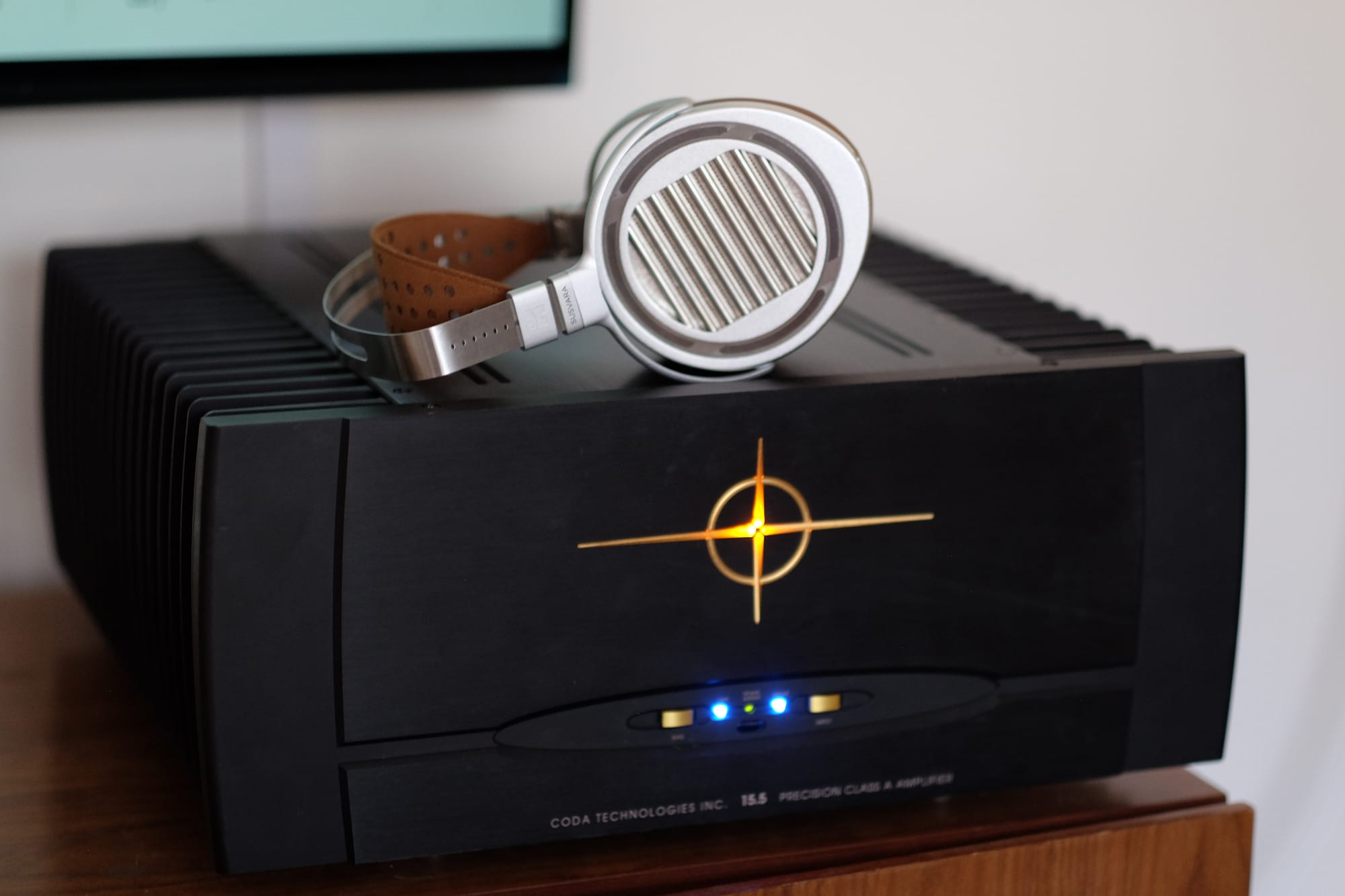
When my friend Chris offered to not only lend his Susvara Unveiled, but also his Coda 15.5 and Audio Technica ADX7000, I felt this was the best possible chance I'll get at enjoying this headphone. And yet as I'm listening to music with them while writing this review...I still feel nothing.
Build
The main point of contention I see about the Unveiled series from people is the fact that they have removable protection plates. These plates protect the (very open) drivers from any loose matter that may damage them. The point of the openness is to, allegedly, "eliminate reflection and refraction." In practice, it's even more annoying than I thought it would be. As this is an eight thousand dollar headphone, I was absolutely terrified of even keeping it out. I, of course, take care of loaned gear, but this took on a whole new level of preciousness because it's so fragile. The plates were my best friend and worst enemy. I felt the plate system, with their hilariously weak magnets requiring careful placement, was ridiculous. The occasionally have even come off while they on my stand..
My last part is a theme I've experienced with Hifiman: almost everything from them feels cheap. The pads use cheap-feeling pleather, the "suede" headband feels artificial and smells like cardboard, and the swivel is a little too loose. This build quality would be below-par in a $150 headphone. The fact that this headphone costs as much as an "okay" condition Mercedes Benz R129 SL500 and feels this cheap is shameful.
Associated Equipment
HQPlayer (sinc-mg filter) -> Afterdark Rosanna Diretta Network Bridge -> USB Fiber Isolator -> Accurate Audio DIP-B660 DDC -> Schiit Yggdrasil More is Better or prototype PCM1794 DAC -> Esoteric A100 or Coda 15.5 -> Lundahl LL2774 Transformer Adapter
HQPlayer (sinc-mg filter) -> Exogal Comet -> Pass DIY WHAMMY with Sparkos SS3602 opamp
iPhone -> Chord Mojo2 with XDuoo 05BL Bluetooth Adapter
iPhone -> Apple 3.5mm to Lightning adapter
Sound
I didn't want to give first impressions of the Susvara Unveiled because my "first impressions" really are "fourth impressions" so I am skipping straight to my subjective sound analysis.
I think these sound alright. It would be hyperbolic to say I don't think they're very good, but I also have no strong feelings about them. Like the title alludes, they present the idea of music and I can't say they're really missing anything, but I also don't feel any joy listening to music with them. This is coming from someone that loves the Sennheiser HD6X0 series, a lineup that many describe as boring.
Bass
The Susvara Unveiled has bass extension to 20Hz and remains flat through the center midrange. This gives the perception of a clean, fast sound, but this has some tradeoffs. Subjectively, I like hearing a little bit of a boost in the upper bass to give a little extra body to more closely match what I've heard in real life. To give some background, I started this hobby because I was a band nerd that then lived in a jazz jam house and continue to love non-amplified live music. My music listening is heavily influenced by wanting to "feel" like I do when I am at a venue. When I'm at the Boston Symphony Orchestra, I'm rarely, if ever, listening for when the second chair oboe player is shifting in their chair. I'm absorbing the music and the atmosphere as a whole, and that involves accepting the imperfections of the venue. I'm willing to tolerate a more bottom-heavy sound as that's closer to how I hear a performance. Ironically, this is the same explanation Axel Grell gave for tuning the OAE-1 but I do think those went quite a bit warmer than I'd consider realistic.
This all is to say that I understand the concept of tuning the Susvara Unveiled and I can understand the fans of people that like this kind of leaner, more "resolving" sound. It pushes the impact of drums back and gives more space for woodwinds and brass, but the problem is a much cheaper Hifiman Edition XV will also do this at 5% of the price. When a headphone flattens bass and as a result, flattens many of the transients and decay I like hearing in a timpani or a kick drum, it strictly sounds less resolving than a much, much cheaper headphone that does not miss these transients. It's this speed that makes a real drum sound more like a synth preset to me. While I do love an 808 beat, I don't really want Jeff Porcaro to sound like he's using anything but actual drums.
Midrange
My complaints with the bass not only extend to the midrange, but manifest in larger numbers in the midrange texture. With the Susvara Unveiled, I truly feel no emotional connection to music. While I can have moments of frisson with a $15 Creative Aurvana Live or Koss KSC75, I was never able to feel anything while listening to music with the Susvara Unveiled. Part of this is related to the fact that the Susvara Unveiled does retain some of the "soundstage dip" between 1kHz to 3kHz that does provide some idea of depth by making this range harder to hear. As someone who struggles to hear soundstage in any headphone, this does not help my enjoyment of music so much as adds to my laundry list of problems.
The greater issue I have with the flatness to 1kHz, however, is that the lack of upper bass body ends up leading to a thin sound in the low midrange. I am able to hear Tool's Rosetta Stoned with extraordinary clarity but the instruments themselves sound, frankly, neutered. There's no midrange energy to be found, and it sounds more like something I would hear in an elevator.
Treble
To give Hifiman some grace here, the Susvara Unveiled is the closest I've gotten to being satisfied with treble from them. There is still more air than I'd like but as this is a range that is going to vary widely between people, I will take any wins I get with a planar magnetic headphone. Since the treble is closer to my comfort level, I do end up actually hearing a more spacious sound than I typically do from a Hifiman headphone. My Hifiman Arya V2, in contrast, has so much treble that information above 8kHz sounds masked due to the sheer elevation of its treble. I actually hear the Susvara Unveiled's treble as markedly smoother than most headphones in general, which is a huge step in the right direction.
Measurements
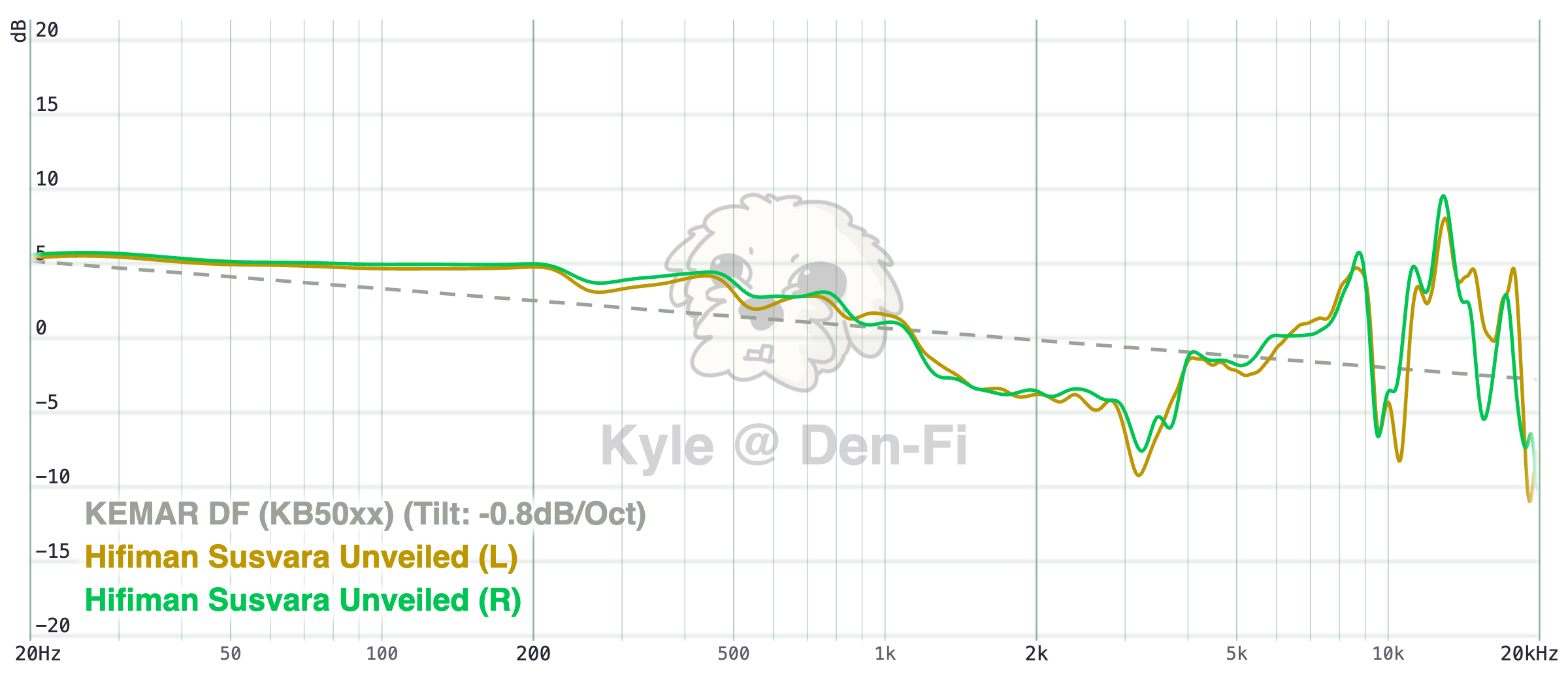
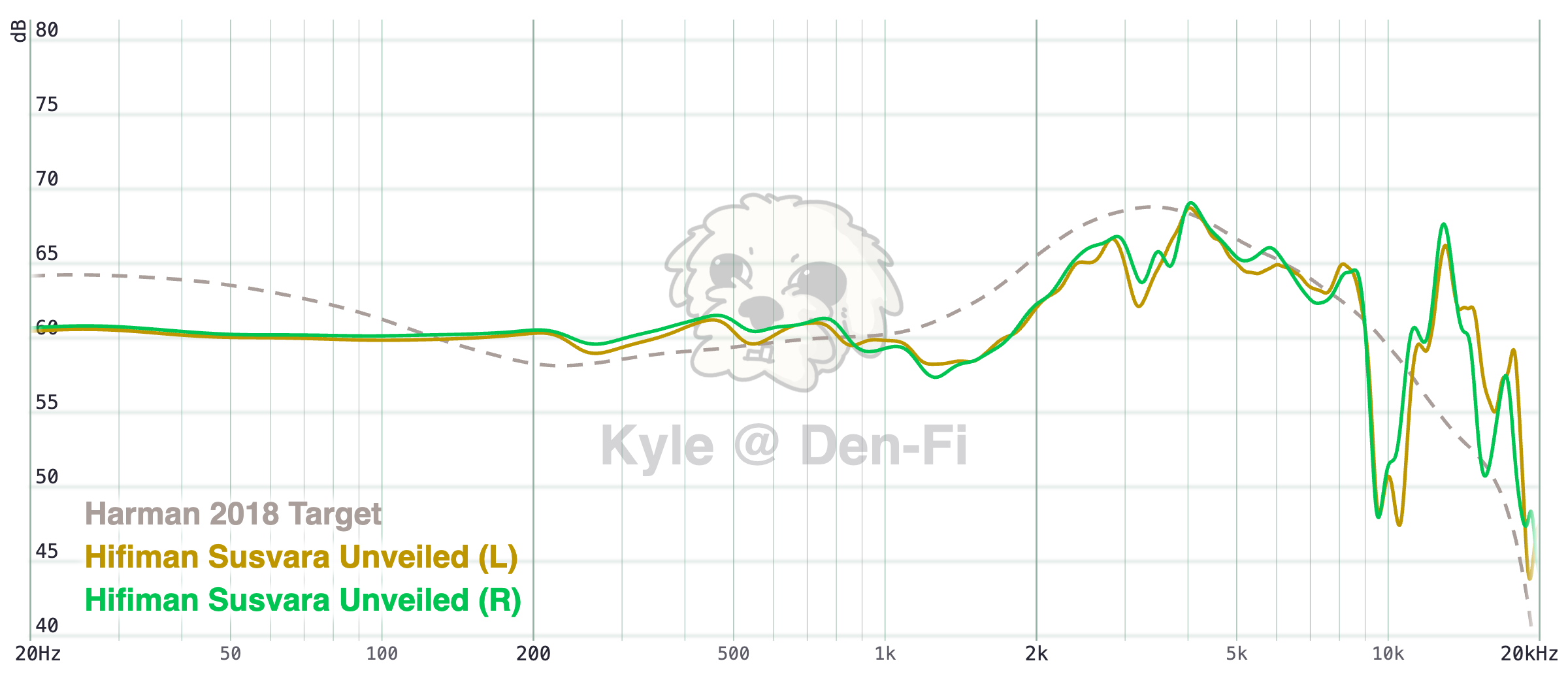
How do they measure? Like a Hifiman!
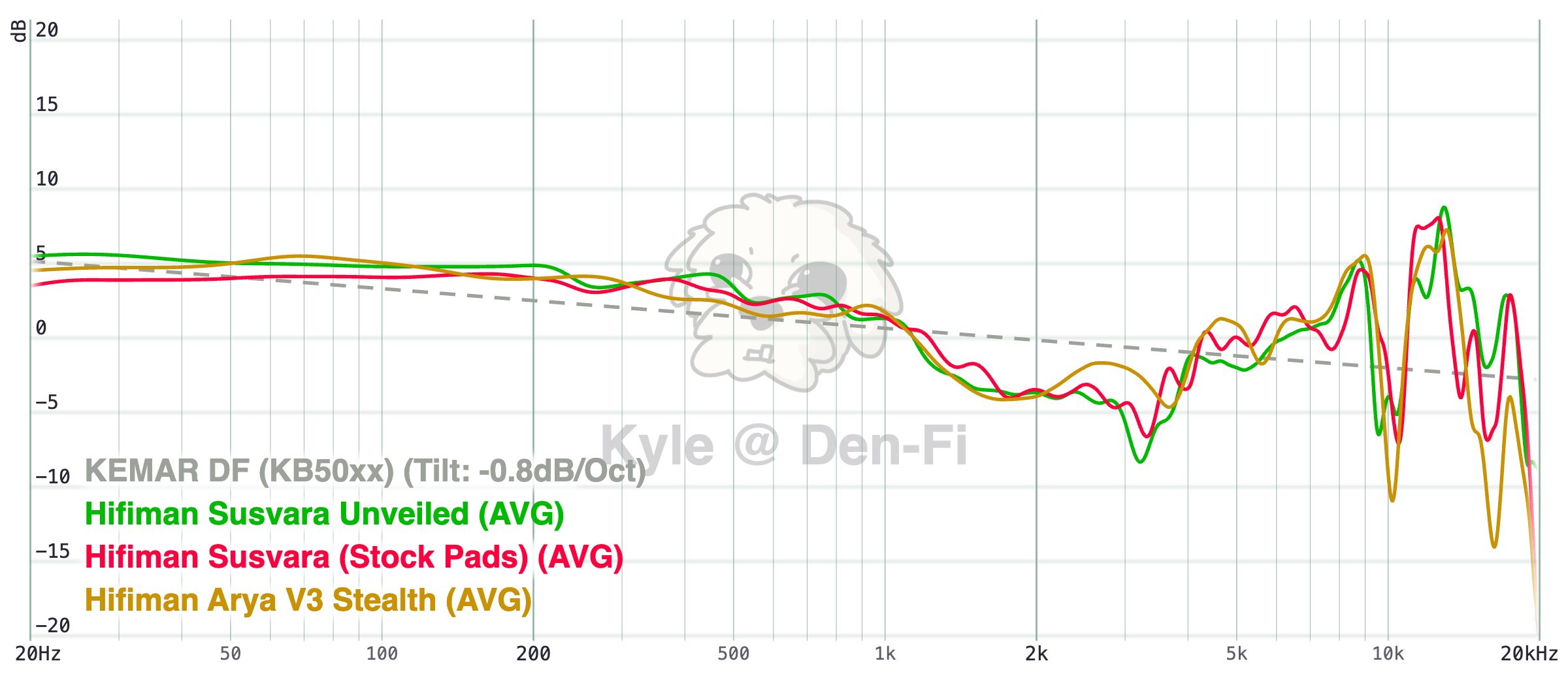
Subjectively with a tone sweep, I am less bothered by the Susvara Unveiled's treble than my Arya but other than that, which is likely a function of HpTF, Hifiman headphones do tend to sound mostly similar to me. I do hear the Susvara as more resolving than the HE1000 or Arya, but it's also significantly less bright to me, making finer details easier to hear.
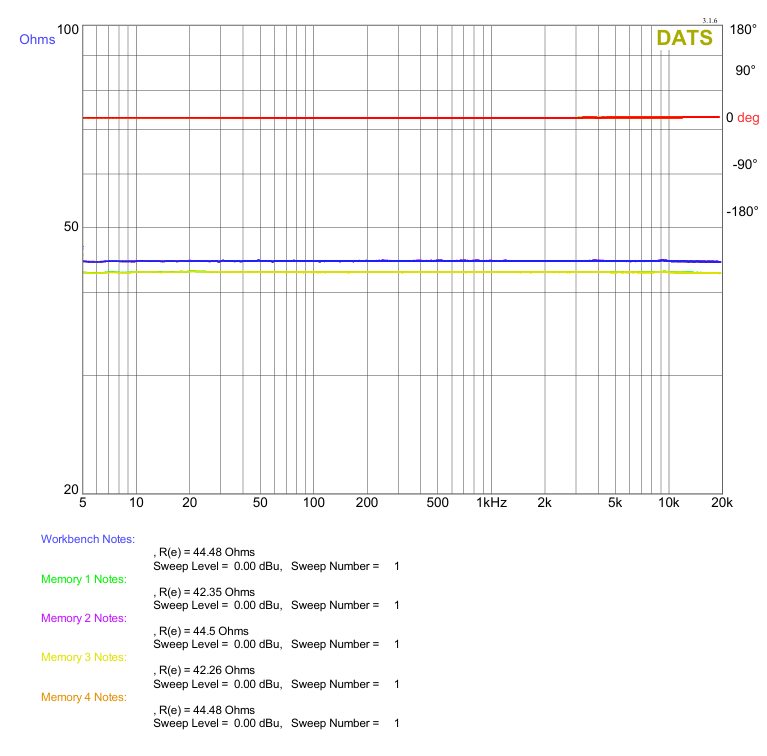
No surprises with the linearity test other than the impedance difference in a headphone at this price. The left and right drivers measure with a 2ohm difference. In practice this isn't actually noticeable but it's still not the best look.
Comparisons
Versus HE400SE (Unveiled)
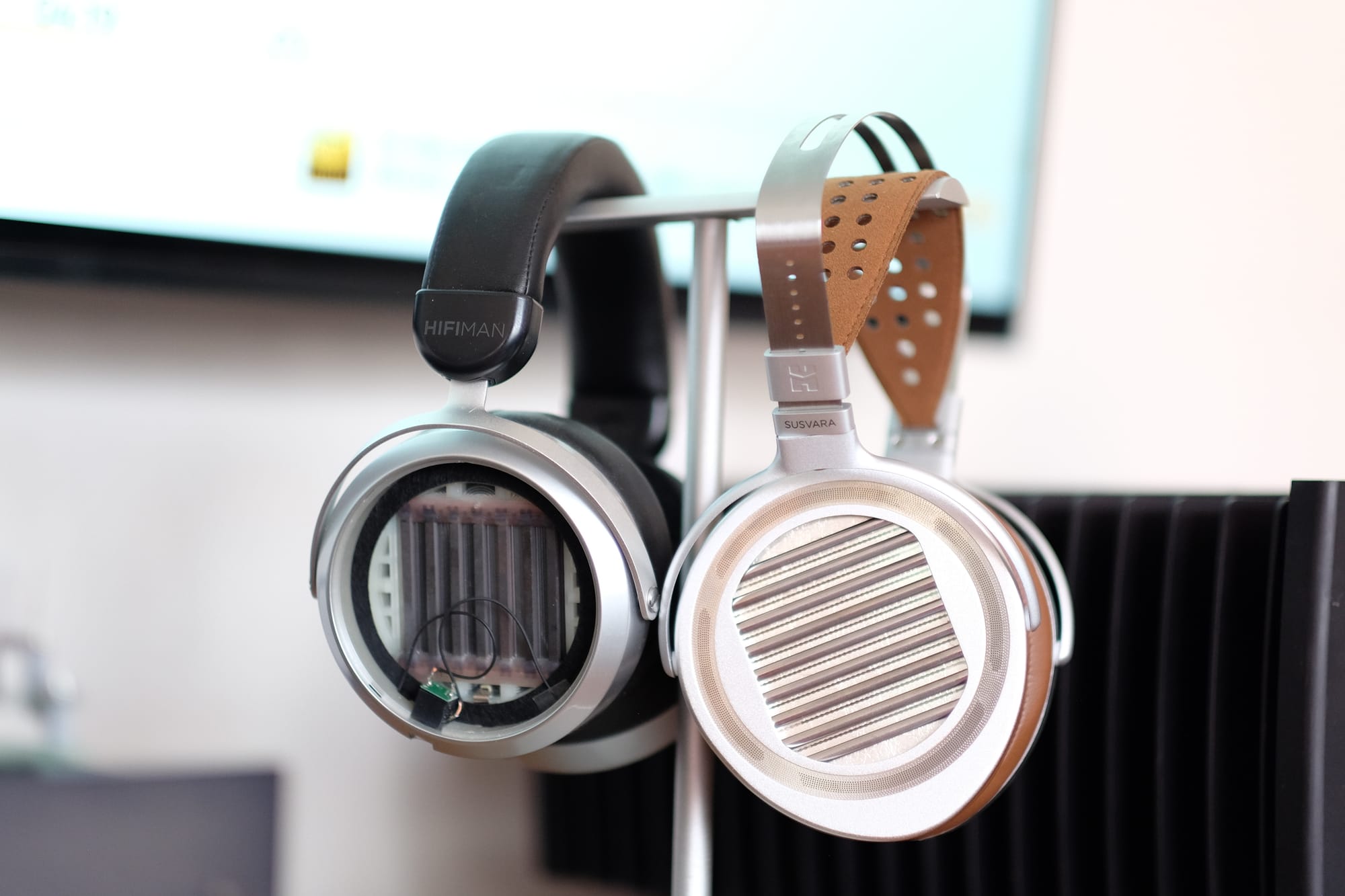
At first glance, this is a bit cheeky but it makes some sense to compare Hifiman's cheapest and most expensive planar magnetic headphones. At the very least, they measure fairly closely to each other:
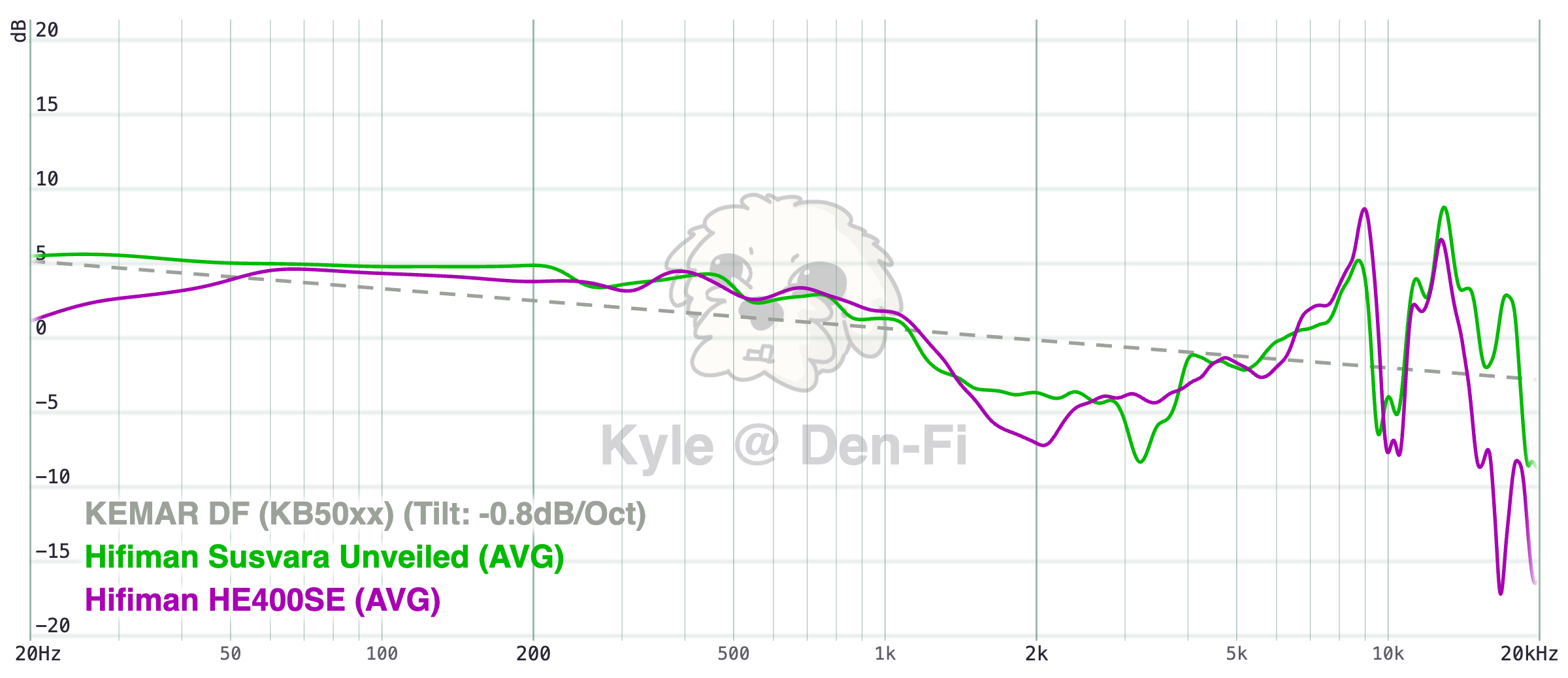
There are obvious measured differences but even back to back, they do sound like siblings. How does a headphone that costs almost a hundredth of the Susvara Unveiled actually compare in practice? Honestly, it's much closer than I would like to believe. The HE400SE's more dipped upper midrange and boxier sounding low midrange do noticeably portray a different character, but not nearly as much as the HE400SE's treble. While it measures as less elevated in air, it actually sounds significantly more intolerable when doing a sweep on my head. It also, for reasons I still can't explain, sounds like it's clipping at no matter what volume I listen. At volumes that are barely audible, the treble sounds so uneven that it legitimately sounds like it's breaking. I've measured it multiple times and nothing seems wrong, but this pair and the other three pairs I've used had this behavior.
So I don't think I can comfortably say the HE400SE is the way to go for the Hifiman sound, but Edition XS is now $209 in the US as of this review, and I truly can't think of many reasons for most people not to just get that and EQ the treble down over the Susvara Unveiled.
Versus ZMF Caldera
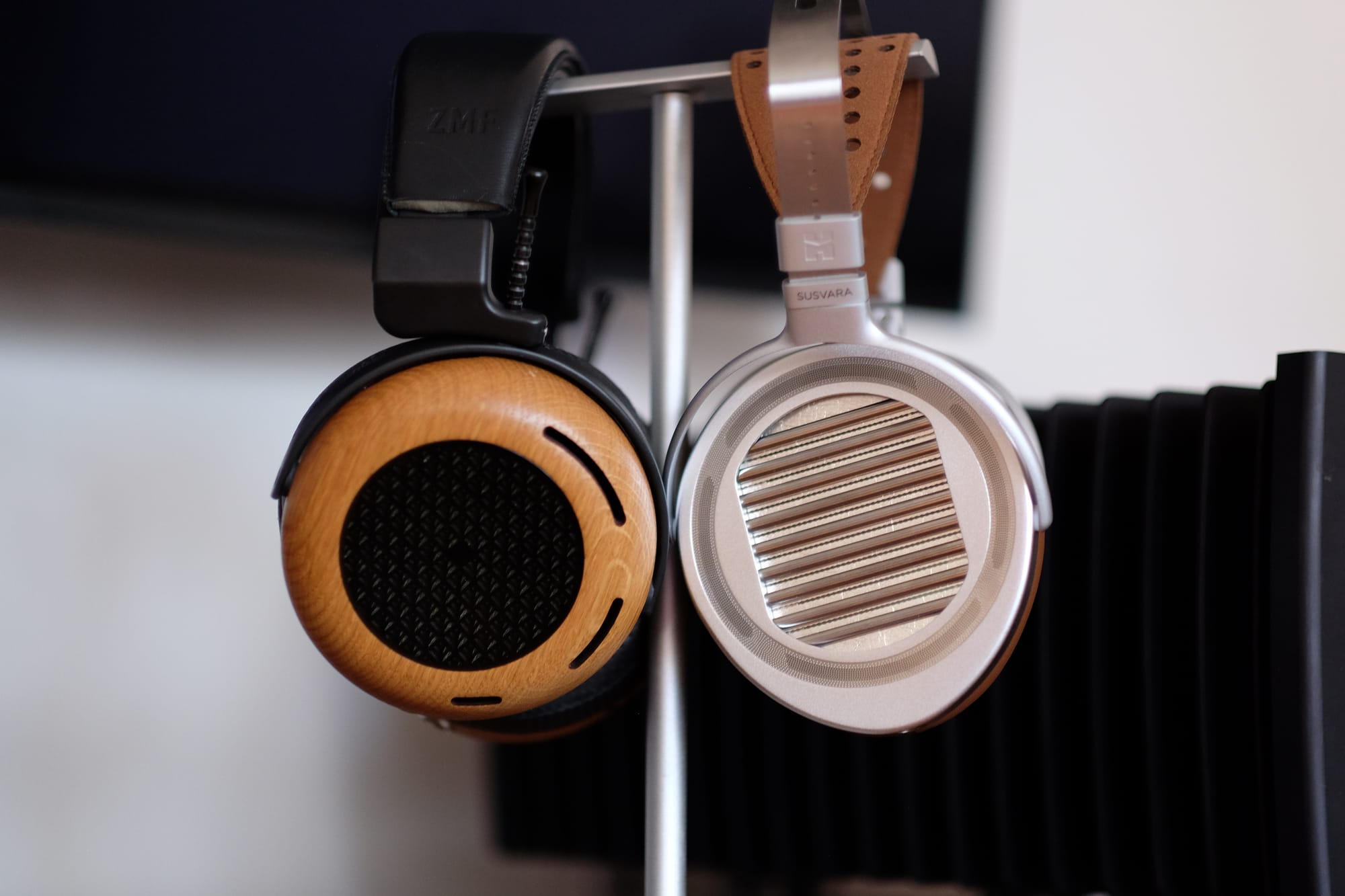
Most of this comparison can be copypasted from my Caldera review, despite originally comparing it to the OG Susvara. In fact, that's exactly what I will do here, since as I reread it, I don't have anything to add:
The Caldera and Susvara strive for different presentations of bass. The Caldera provides thicker mid bass and upper bass than the Susvara, which sounds rather thin when compared back to back with the Caldera with its flatter target. What the Susvara does tend to achieve, however, is slightly better sub bass extension. I do believe there is often an outsized emphasis on sub extension, as the amount of music I listen to, and I would imagine most non-EDM-heads or non-organ-devotees listen to, that actually requires extension to 20Hz is infinitesimal compared to music that rewards performance elsewhere in the frequency spectrum, but it is worth mentioning that the Caldera dips sub bass about 2dB relative to the Susvara. However, that may also be related to my hair: I've needed a haircut for a couple weeks, which may lead to poorer seal, which in turn leads to worse sub bass extension. Beyond amplitude, the Caldera did seem to reveal texture in a more natural way as well. While the Susvara was able to resolve individual notes well, the Caldera's more accurate reproduction of decay adds to the sense of realism--being able to hear the attack, decay, and sustain of an instrument fleshes out the whole experience to me, and while the Susvara is a noticeably faster sounding headphone, this sounds fake to me, and this reveals itself to be problematic to me in every aspect.
Midrange is a problem I've always had with the Susvara, and listening to the Caldera has helped me understand why I'm so unhappy with the Susvara. Both the Caldera and Susvara have dips in the upper midrange that seem to create a more spacious sound: the Susvara dips starting at 1kHz and rises at around 2.5kHz. This leads to a vocal presentation that has always sounded quite nasal to me, no matter what chain I've used with the Susvara. The Caldera also dips at 1kHz, but rises sooner, at around 2kHz. This, on paper, is not a significant difference. The actual disparity between preference for me, I believe, is that the Caldera uses that upper midrange dip in combination with the warmth of the low midrange and additional peaks and dips past 2kHz to create a more involving, emotional sound. In contrast, the Susvara is much less dramatic, almost sterile. While "colored" seems to be a four letter word in describing sound, the Caldera uses this coloration to compel me to rediscover music and move me in ways I don't experience with other, more "neutral" headphones. The Susvara, on the other hand, makes detail apparent, but sounds almost robotic in comparison. It's a flavor of presentation that is useful in comparing other headphones to it, but I found my time with the Susvara to be strictly using it for that. I never actually enjoyed listening to music with the Susvara, I only used it to discover what detail other headphones resolved less than it.
Moving to treble, the Susvara is brighter than the Caldera across the board. Unlike the Caldera, the Susvara's treble is less dramatic. It doesn't have the same kinds of peaks and dips as the Caldera, but, again, the only time the Susvara's treble compelled me to feel anything was when I felt it made bright recordings sound too bright.
The Susvara's soundstage is the main "party trick" that I can see people preferring over the Caldera. It's more ethereal and wide than the Caldera. It doesn't approach speaker soundstage, but it is closer to electrostatic headphone stage. Instruments don't blend together on a stage like they do with the Caldera, they sound discrete, like listening to separate recordings. I rarely hear a sense of cohesion with the Susvara in the same way I hear with most other headphones. I don't necessarily think this is wrong, as detail-heads will likely find this more interesting because it is easier to extract more from instruments, but the Caldera does sound noticeably more "realistic" in that the presentation of the Caldera matches the idea of a stage performance more closely.
This comparison seems largely like an indictment of the Susvara and while I don't intend for that, I can't help but feel this way. I've used several Susvaras over the years and every time I mention my lukewarm-at-best feelings, Susvara owners are quick to mention I'm not using a powerful enough amp. When I say I've only used overpowered speaker amps with the Susvara, the goal posts move, and I don't know if they will end unless I end up buying "amp du jour," which seems like it changes every few months, and then the previous amp is cast away. The problems I've had with the Susvara manifest themselves across every single setup I've used it with, so at some point, the gear stops being the problem and the easier explanation is that the headphone just sounds like that. I think it is totally valid for people to love the detail-heavy, moderately bright and lean sound of the Susvara, but I found listening to music with the Susvara to almost be a chore. So the answer to, "Is Caldera or Susvara better?" is this: "The one that fits what you want out of your music more." I see compelling points for both sides, so it's more likely that the question isn't either/or, it's being able to justify the significant monetary outlay involved in owning both.
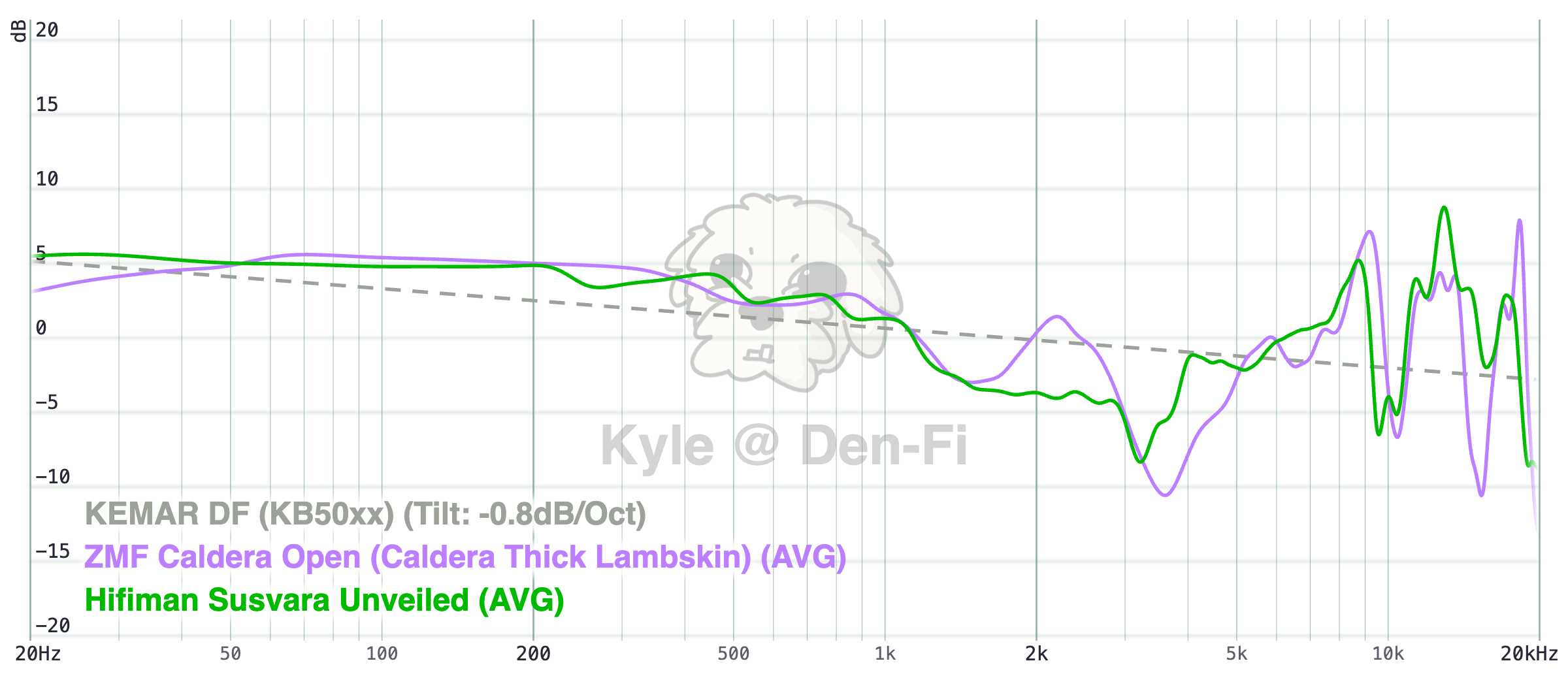
I do hear significantly less treble on the Caldera than the Susvara Unveiled, so I perceive them to be much warmer and relaxing than my KB50XX clone pinna would suggest.
Versus Audio Technica ATH-ADX7000
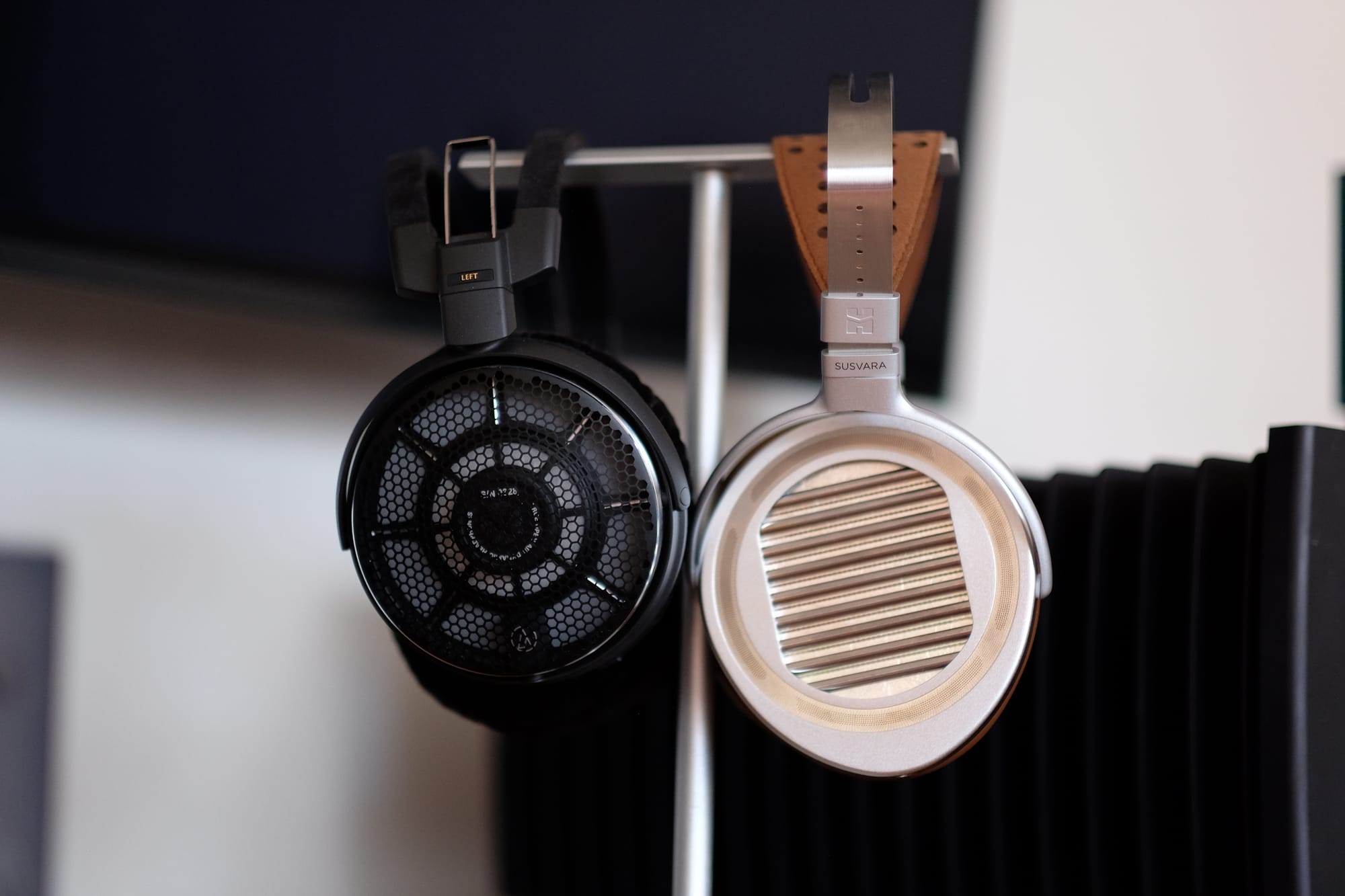
These two headphones could not sound more different. The measurements actually undersell just how different they sound:
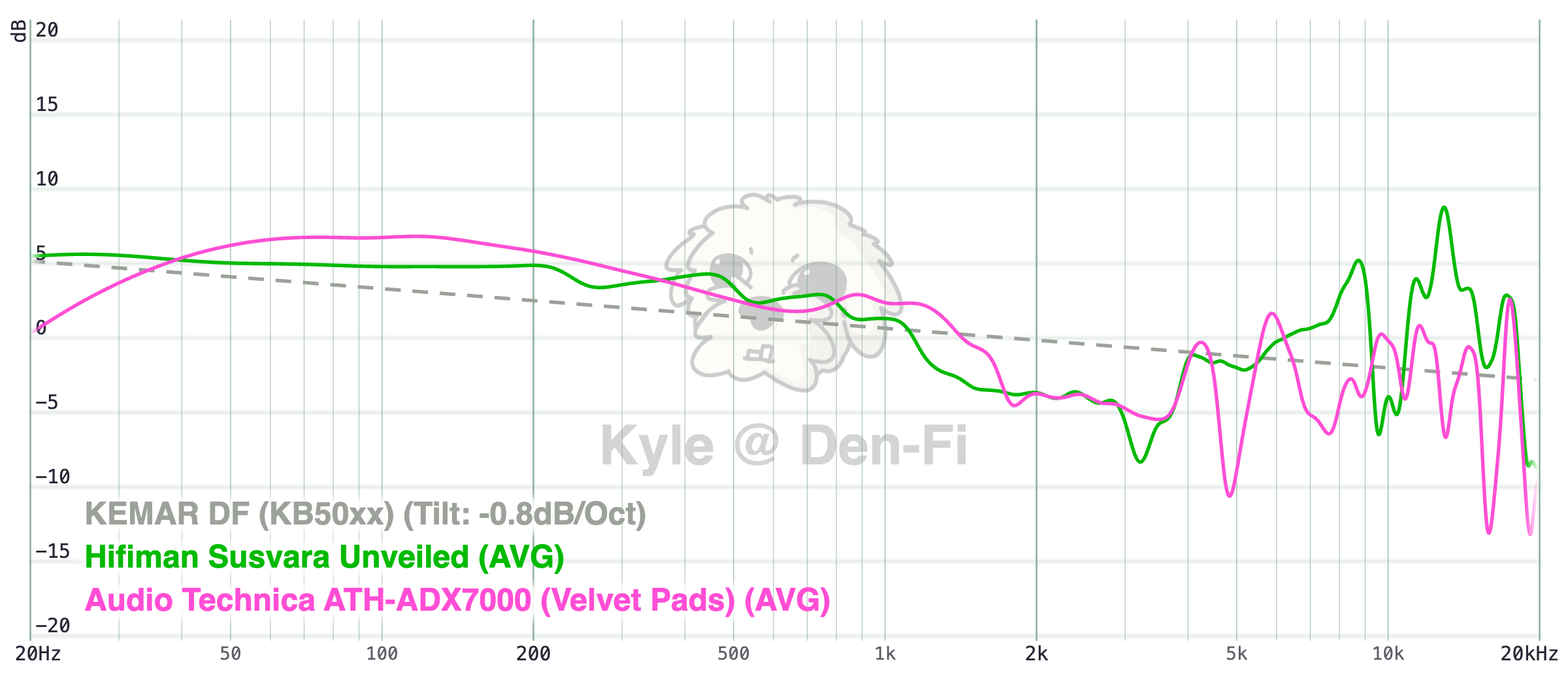
Back to back, the Susvara Unveiled's lean bass does occasionally show the ADX7000's upper bass to be a smidge elevated relative to my preference, but then switching from the ADX7000 to the Susvara Unveiled lays bare just how dull the Susvara Unveiled actually is. While the ADX7000 can sound a little oversaturated, the Susvara Unveiled in turn goes far too much in the other direction for me.
Before comparing directly, I expected the ADX7000's bass to sound slightly plodding compared to the Susvara Unveiled, but the ADX's center mid bump prevents the mild upper bass boost from adding congestion. The body also helps create a more realistic tone and timbre to not only percussive instruments, but brass and woodwinds as well. They have the thickness I expect to hear from an instrument that I so sorely miss from the Susvara Unveiled. It does sound slightly "slower" in the sense that instrument decay does linger more, but this exactly is what aids with the illusion of a music performance.
While both headphones measure with a similar dip between 2k-4.5kHz, the lack of center midrange bump makes the Susvara Unveiled sound much more relaxing. It's a strange feeling saying that a Hifiman headphone sounds relaxing, but back to back, I actually think I would be able to use the Susvara Unveiled for a longer listening session. The ADX7000 demands attention in a way that the Susvara Unveiled does not, and as a result, does relegate it to dedicated listening time.
Treble between the two may be more varied between people for reasons beyond HRTF and HpTF. We have found that the ADX7000's treble is highly dependent on clamp which is an additional variable to consider. I've been lucky enough to not have any problems with the ADX7000's treble, but I know more people that do have issues than do not. I would not be surprised if anyone perceives the Susvara Unveiled's treble to be more controlled than the ADX7000. On my head though, I find the Susvara Unveiled's treble to mask more detail than the ADX7000 and overall less textured.
Conclusion
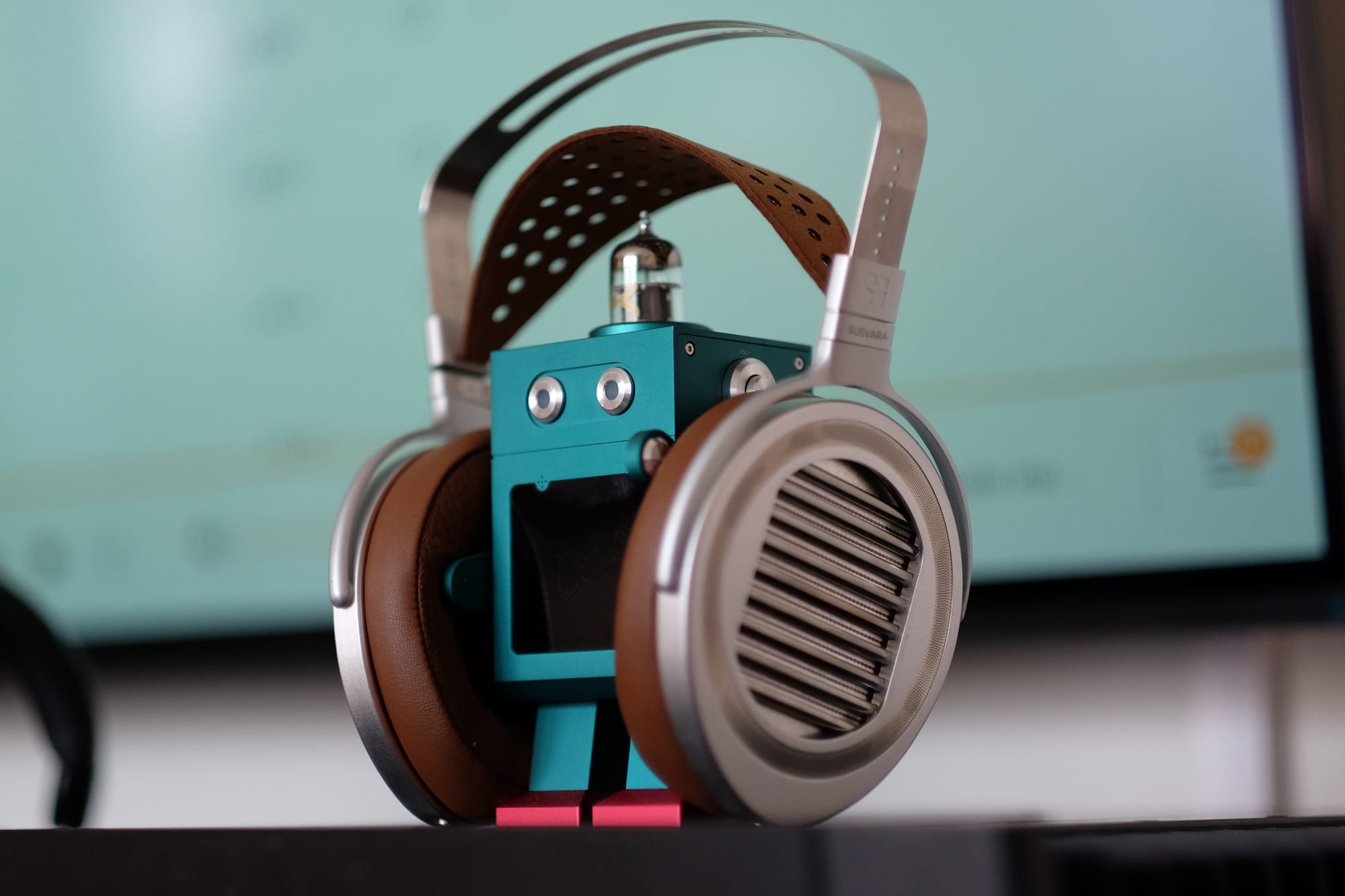
I know what many people may be thinking: "Well you're just not driving it enough..." No. And no. These two amps are some of the best amps I've heard with headphones, and some of the most powerful. I think my problem with the Susvara Unveiled is strictly a framing issue. I don't listen to music the way that the Susvara Unveiled wants me to listen to music. As a result, the Susvara Unveiled's presentation creates an AI-like uncanny valley of all the elements of sound being there, but nothing coalesces into music. This review has been difficult to write because the Susvara Unveiled is not a bad headphone, it's just tuned to prioritize everything I don't care about and nothing that I do. It's a manifestation of "My-Fi," a term likely coined by the late J. Gordon Holt and an acceptance of the fact that I am part of the problem. To wit, here is a key part of this interview:
Atkinson: Do you see any signs of future vitality in high-end audio?
Holt: Vitality? Don't make me laugh. Audio as a hobby is dying, largely by its own hand. As far as the real world is concerned, high-end audio lost its credibility during the 1980s, when it flatly refused to submit to the kind of basic honesty controls (double-blind testing, for example) that had legitimized every other serious scientific endeavor since Pascal. [This refusal] is a source of endless derisive amusement among rational people and of perpetual embarrassment for me, because I am associated by so many people with the mess my disciples made of spreading my gospel. For the record: I never, ever claimed that measurements don't matter. What I said (and very often, at that) was, they don't always tell the whole story. Not quite the same thing. Remember those loudspeaker shoot-outs we used to have during our annual writer gatherings in Santa Fe? The frequent occasions when various reviewers would repeatedly choose the same loudspeaker as their favorite (or least-favorite) model? That was all the proof needed that [blind] testing does work, aside from the fact that it's (still) the only honest kind. It also suggested that simple ear training, with DBT confirmation, could have built the kind of listening confidence among talented reviewers that might have made a world of difference in the outcome of high-end audio.
Strong stuff.
As much as I don't like the fact that the reason I feel so lukewarm about these headphones strictly is because I want them to sound less dull, understanding that this is my problem with them is really important!
This is not to denounce J. Gordon Holt; I think he's correct. The Crinear Reference, an IEM that measures quite close to JM-1 with a -1dB/oct tilt, does perceptually sound much closer to any instrument I have heard in real life than perhaps any other transducer I've heard. So this does lead to the question of why I like headphones that measure much more colored than the Susvara Unveiled. I think the key is balance. Since the Susvara Unveiled has a "soundstage dip" in the upper midrange, the recession removes a lot of energy that I need to perceive music as more realistic. EQing this up by ear does bring back much of the energy and harmonics I expect to hear. The ADX7000, in contrast, attempts to have its cake and eat it by artificially boosting features that are missing while retaining its dip. Like I said earlier, it's an oversaturation that happens to balance out the issues they create.
Many people get into this hobby to recreate their first breakthrough moment and the path to that happiness is different from person to person. While it's easy to fall into the trap of expecting audio to be a linear progression where better numbers necessarily yield better sound like PC gaming, audio, I feel, is so much closer to food. Many people want nothing more but salt and pepper on a steak to show off the quality of the meat, which some may believe is a boring way to eat. In contrast, so many others use meat as a vessel for their own seasonings and sauces that purists may view as sacrilegious. An ideal meal will be down to personal preference, yes, but I do think there are no downsides to starting with the best cut possible.
In the same vein, some people believe sonic perfection is being able to hear as much as possible in a song. For others, it's finding the right balance of wrongs to make a right. I do think the path forward is trying to create the best canvas possible to start with, but I can only talk about what currently exists. The Susvara Unveiled is more like a very, very detailed picture of a steak.
Comments?
Leave us your opinion.